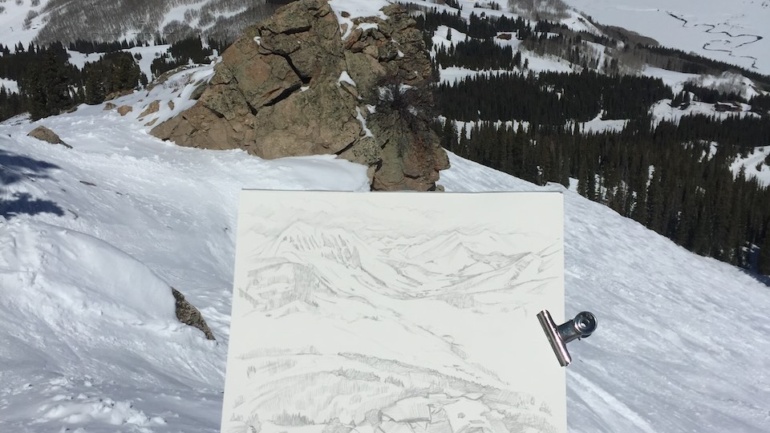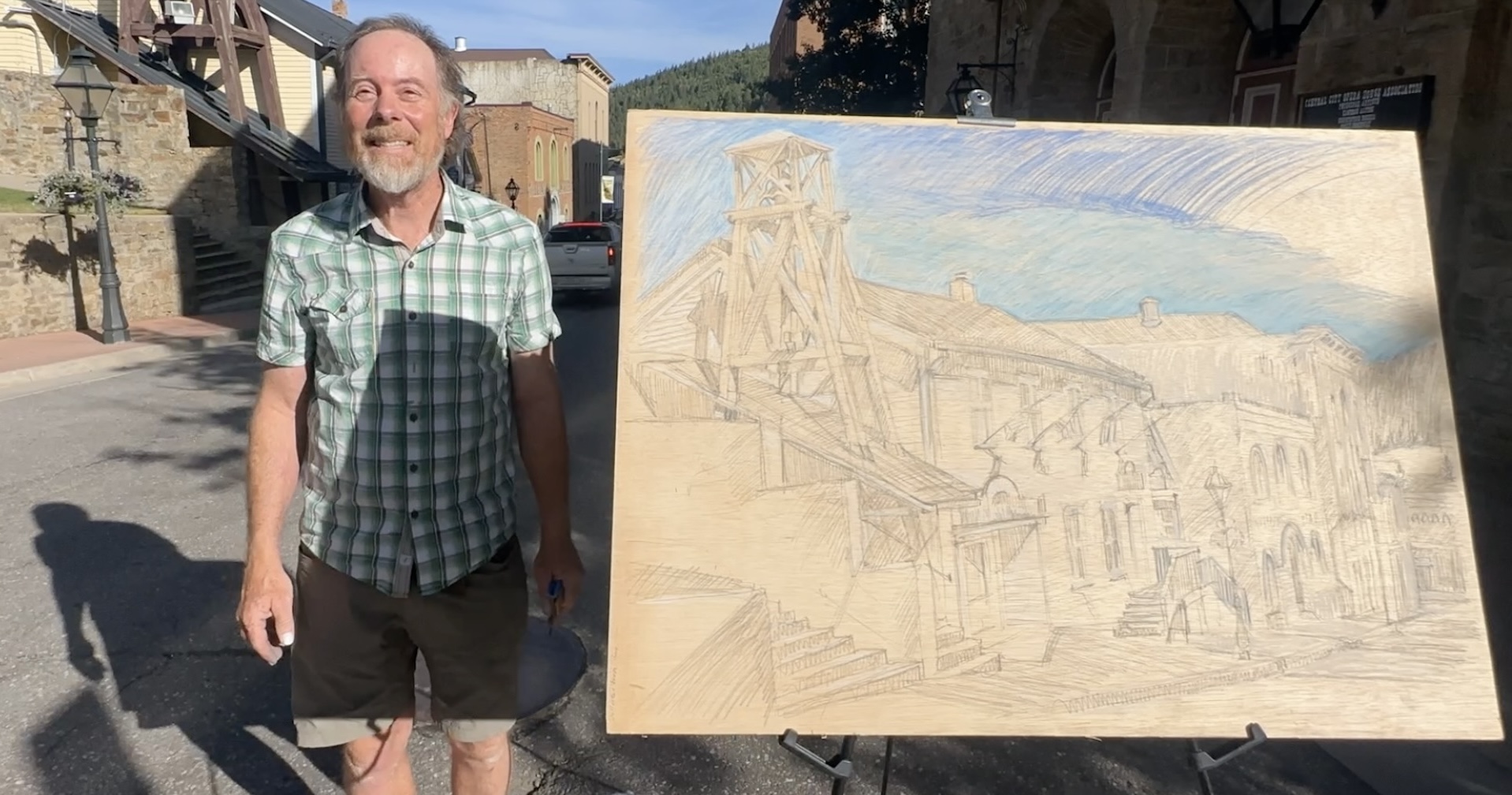
En Plein-air, in French, is the practice of painting outdoors, and began in France in the mid-1800’s. The inventions of both tubes for transporting paint, and easels and portable boxes to hold gear (called pochade boxes) meant that painting could be expanded beyond an indoor studio setting.
Mostly, these early practitioners of pleinair work developed ways of working outside so they could observe and record nature more closely to get realistic results. There are a number of artists credited with developing their inspiration by looking and working outdoors. Pierre-Henri de Valenciennes (December 6, 1750 – February 16, 1819) is among the first who developed theories about the importance of painting outside to capture the true colors and values of a scene. He would often paint the same tree at different times of day, a process emulated by artists of today.
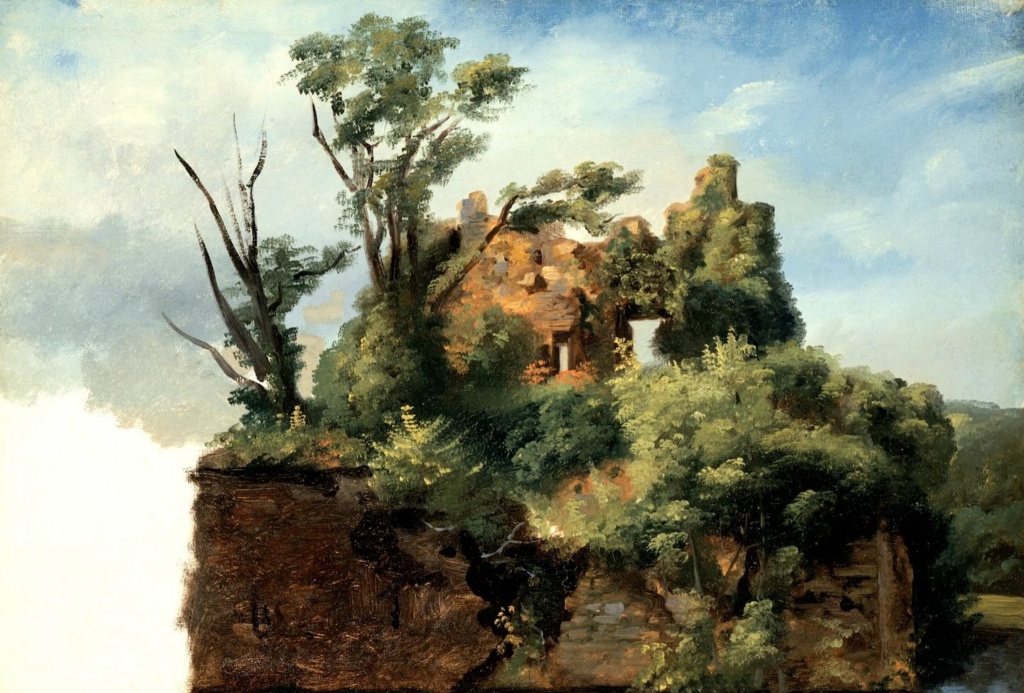
Pierre Henri De Valenciennes, Landscape with Ruins, 1785
Another artist pushing the boundaries of what was appropriate to paint was Jules Bastien-Lepage (1 November 1848 – 10 December 1884). Jules was a French painter closely associated with the beginning of naturalism, an artistic style that grew out of the Realist movement and paved the way for the development of impressionism.
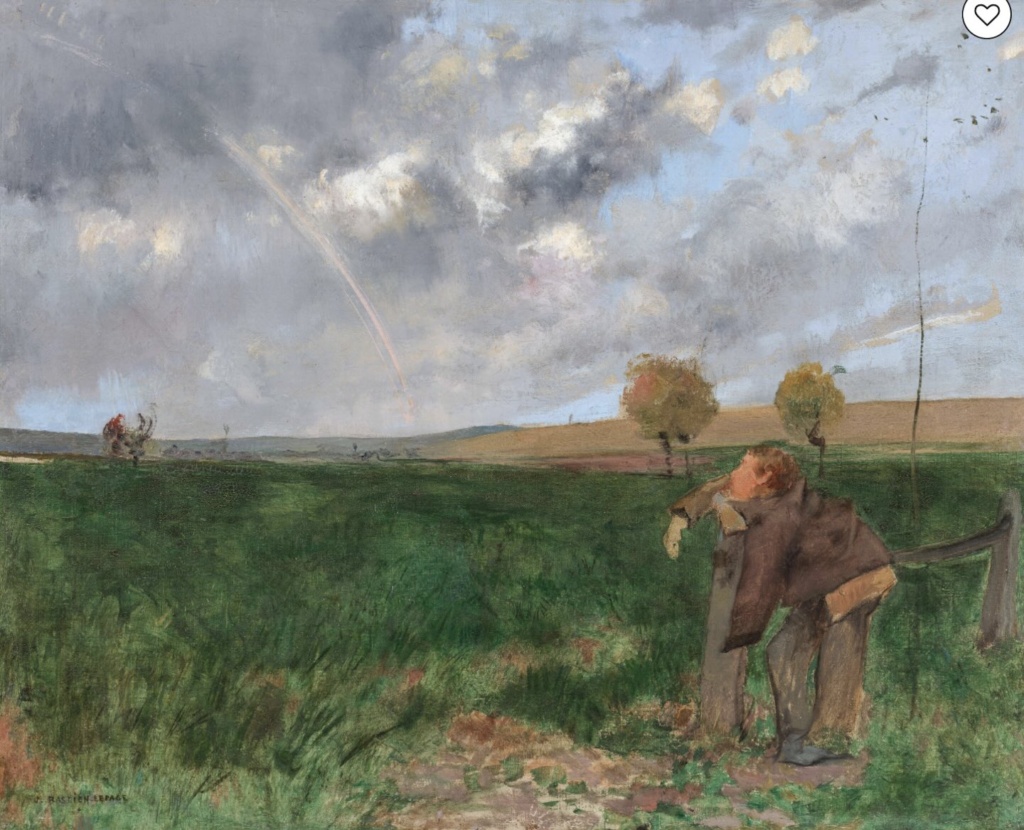
Jules Bastien LaPage, L'Arc-en-ciel, 1881
The work of Jules LaPage, in turn, directly influenced artists like Stanhope Forbes, a painter associated with the Newlands Art Colony in Cornwall, England.
Below is one of Stanhope’s most famous pieces of a fish sale in Cornwall, in which direct observation of the colors of the seaside influenced a deep sense of realism, and garnered him a prestigious award.
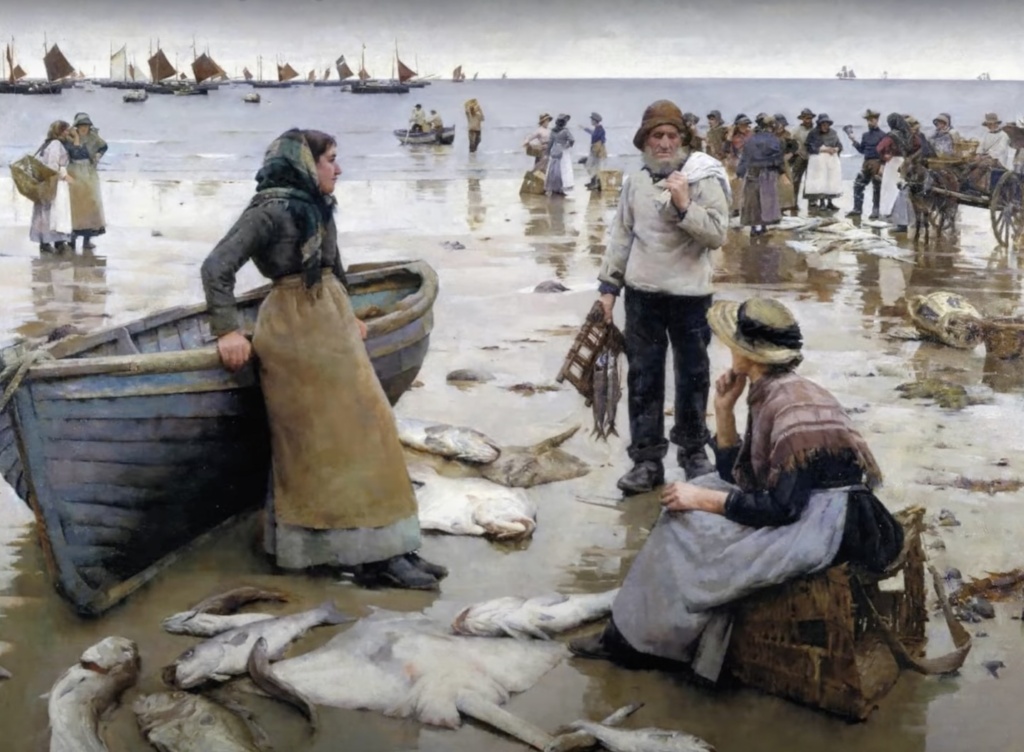
Stanhope Forbes, A fish Sale on a Cornish Beach, 1884

Stanhope Forbes painting outside
Not only did Stanhope spend his life depicting life in Cornwall, exhibiting and teaching, he married Elizabeth Forbes, a stellar artist in her own right. Elizabeth was one of the few women making headway in what was a male-dominated profession.

Elizabeth Forbes, Blackberry Gathering, 1912

Elizabeth Forbes in her studio
Elizabeth Forbes was a pioneer in pursuing a career in art at a time when women were not expected to do such a thing. Therefore, she is an early exemplar of a distinctly feminine sensibility in the fine arts, a lone voice in a male-dominated field.
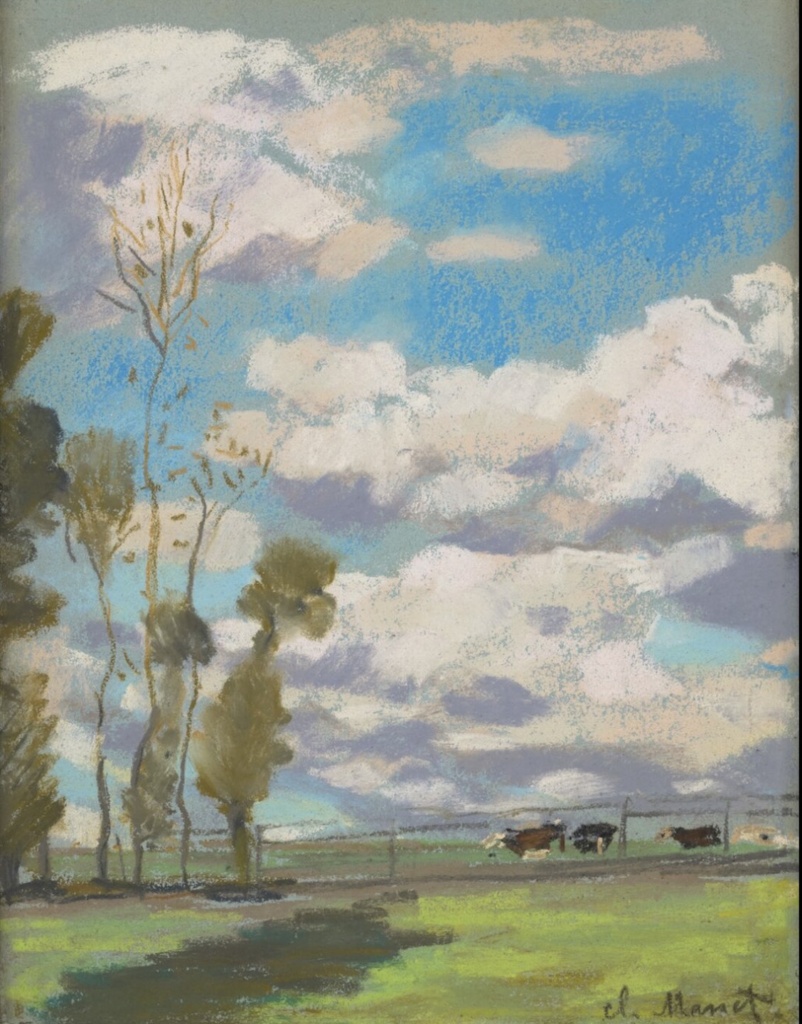
Below is a chalk pastel drawing by Claude Monet, who of course practically invented ‘impressionism’. His influence is wide-ranging; almost everybody knows his work!